

 En
 Deutsch
Thermal conductivity is the number behind every decision a Sauce Pan Manufacturer makes about the base. Aluminium alloys conduct heat more than ten times faster than 304 stainless steel, while stainless steel resists dents, cleans without staining and keeps its look under daily washing. A saucepan needs both properties at once, and a metal that is strong at one is weak at the other. That gap explains why professional saucepans are usually built in layers instead of from a single sheet.
Why Stainless Steel Needs an Aluminium Layer
A thin stainless base on a small burner heats where the flame touches and stays cooler elsewhere. Sauces, custards and milk catch on the hot spot while the rest of the pan is still warming up. An aluminium layer spreads that heat sideways before it reaches the food.
Two constructions deliver it. An encapsulated base bonds an aluminium disc under the pan floor by impact bonding, and a clad body carries aluminium between stainless layers up the sidewalls as well. In a Sauce Pan workshop the disc route is the common choice for pans heated from underneath, while clad walls even out heat higher up, which counts when a sauce is reduced to a fraction of its volume and the liquid level drops below the disc line.
Induction Adds a Magnetic Requirement
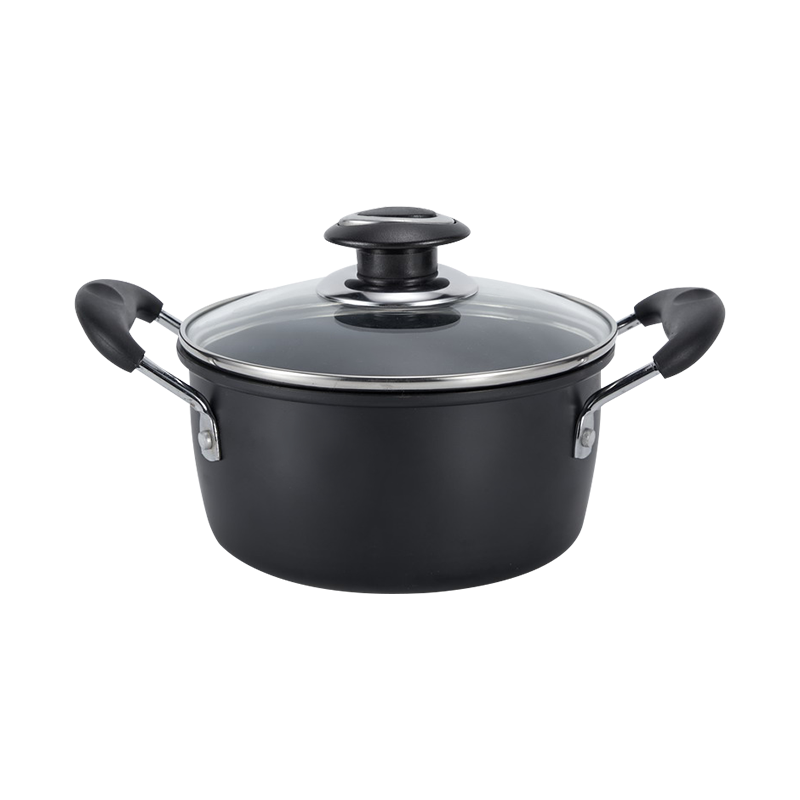
Induction hobs heat the pan itself through a magnetic field, so the pan has to contain ferromagnetic metal. Aluminium does not respond, and common 304 stainless steel is essentially non-magnetic. Induction Cookware therefore carries a magnetic stainless layer, often a 400-series grade such as 430, bonded to the outside of the base.
Gas hobs ask for no such layer. One pan body can therefore leave a Sauce Pan Manufacturer line in two base builds: stainless on aluminium for gas, and stainless on aluminium on magnetic steel for induction.
Flatness gets more attention on Induction Cookware than on gas. Heating efficiency depends on how close the base sits to the glass, and a base that warps under heat rocks on the hob and heats unevenly. A thicker aluminium disc and a stiff magnetic layer both resist that movement, so base thickness is a stability specification as much as a heating one.
Shape Sets Evaporation and Capacity
Capacity labels come from geometry. A straight-sided pan 16 cm wide and 11 cm tall holds about 2.2 litres to the brim (π × 8² × 11 cm³), and nobody fills a saucepan to the rim, so working capacity sits well below the label.
Width matters as much as volume. Evaporation scales with the open surface, so a wide pan reduces a sauce faster than a tall narrow pan of the same capacity. Milk and stock suit narrower shapes, while reductions suit wider ones. Straight sides also let a whisk or spoon reach the whole floor of the pan, which matters for custards and roux that stick in the corners. A Sauce Pan range that offers diameter and height as separate options lets a kitchen match the pan to the task instead of choosing by litres alone.
Rim Shape and Lid Fit
A flared rim directs a thin stream when a sauce is poured, while a straight rim lets liquid run down the outer wall and drip. The rim also carries the lid. A lid that sits slightly loose lets steam escape, which changes how quickly a sauce reduces, and a lid that fits tightly holds moisture for simmering. Rim diameter and lid diameter are therefore set together on the drawing, and Sauce Pan tooling that forms both in one plan keeps the two matched across sizes.
Handle Attachment
Riveted and welded handles both appear on professional Sauce Pan ranges. Rivets give a mechanical joint that tolerates heavy use, and welded studs leave a smooth interior wall where sauce cannot collect around rivet heads. Hollow stainless handles stay cooler over a flame than solid ones, because less metal carries heat away from the pan, and that matters on long-handled pans lifted with one hand.
Handle length, rim shape, base build and finish are adjustable on order, so one pan body can ship with an induction base to one market and a gas-only base to another. Matching the base to the hob types in the destination market keeps a Sauce Pan Manufacturer from sending out a pan that sits dead on a customer's induction top.
Milk scorches where the film against the pan wall is thinnest, so wall construction and base thickness get as much attention on the drawing as the handle.
