

 En
En  Deutsch
A standard-depth cake pan struggles the moment a recipe calls for a tall layered cake, a dense fruit cake, or a cheesecake with a thick crust, since the batter climbs past the rim before baking even finishes. A deep springform cake tin solves this by extending the band height well beyond a standard pan, but that added height changes the engineering requirements on the latch and seal far more than buyers typically expect from what looks like a simple dimensional upgrade. Distributors adding a deep springform cake tin line to their catalog often assume, before looking closely, that it is just a taller version of an existing SKU, which is rarely the case once the actual engineering behind it is examined.
Why Extra Depth Changes the Sealing Requirements
A deep springform cake tin puts more hydraulic pressure on the base seal than a shallow pan does, since a taller column of batter pushes down on the base plate with more force before the structure sets during baking. A latch and seal system designed for a standard-depth pan does not automatically hold up when the same mechanism is applied to a taller band, and a seal that leaks only slightly on a shallow pan can leak significantly once the batter depth increases. Buyers sourcing deep pans should ask a supplier whether the seal design was engineered specifically for the increased depth rather than simply stretched from a standard pan template.
Leak Proof Spring Latch Design at Greater Heights
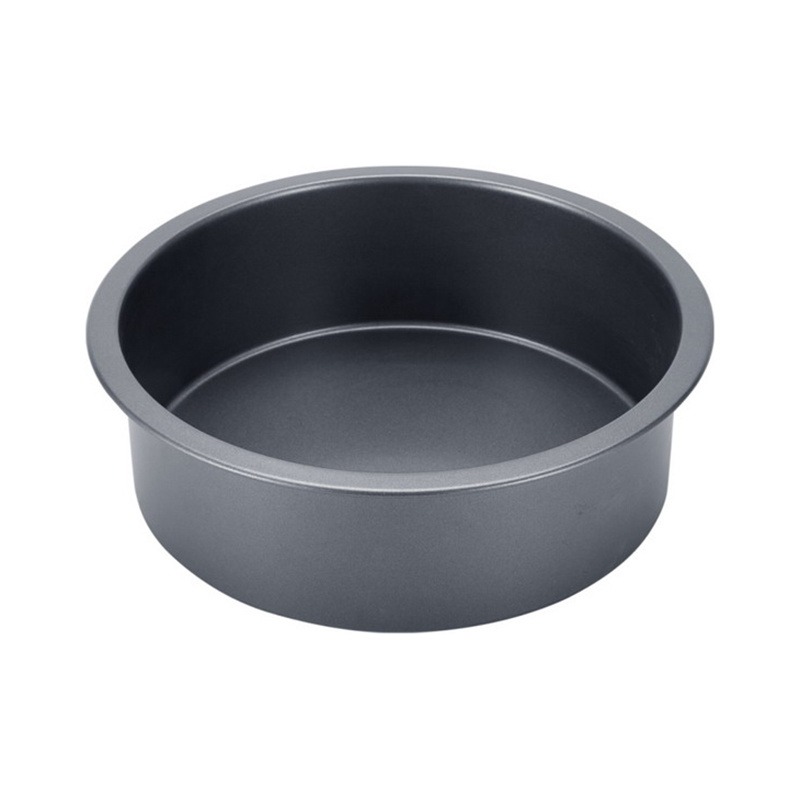
A leak proof spring latch on a deep springform cake tin typically requires a stronger spring tension and a wider sealing gasket surface than a standard pan latch, since the increased batter weight and pressure demand more consistent clamping force around the entire circumference of the base. Buyers should ask specifically how the factory tests latch performance at full depth with a liquid batter simulation, rather than relying on a dry visual inspection that would not reveal a seal weakness under actual baking pressure. A pan that passes a dry inspection but leaks under real batter weight is a defect that only surfaces after a buyer's own customer has already baked with it.
Tall Cake Pan Depth and Even Heat Distribution
Tall cake pan depth changes how heat moves through the batter during baking, since a deeper pan takes longer for heat to reach the center and creates a greater risk of an underbaked middle paired with an overbaked exterior if the metal gauge and coating do not distribute heat evenly along the taller band. A deep springform cake tin built from a heavier gauge carbon steel manages this heat transfer more evenly than a thinner gauge stretched to a taller height purely to cut material cost. Buyers should confirm the metal gauge used on deep pans specifically, since manufacturers sometimes apply the same thin gauge across their entire size range regardless of depth.
Manufacturing Controls Specific to Taller Bands
A factory producing its own deep springform cake tin units typically reinforces the seam where the taller band is welded or rolled, since this seam experiences more stress from the added batter weight than the equivalent seam on a shallow pan. Quality control on deep pans should include a pressure or fill test simulating actual batter weight, not just a visual check of the welded seam, since a seam that looks intact can still fail under sustained pressure during a long bake time. Buyers placing bulk orders should ask whether this kind of functional testing happens on every unit or only on samples pulled from each production batch.
Certification and Bulk Ordering for Bakeware Distributors
Buyers building a bakeware catalog around a deep springform cake tin line should request food-contact material certification and confirm the factory's production capacity for this specific product category, since a deep springform cake tin requires different tooling than a standard-depth pan and not every bakeware factory produces both at the same quality level. Confirming consistent quality control across a bulk order, along with documentation covering recognized food safety and environmental management standards, protects a distributor from the kind of leak-related complaints that surface only after a pan has already reached an end customer's kitchen.
