

 En
En  Deutsch
A baking pan can pass a straightforward chemical migration test and still fail a German food-contact review if the coating transfers even a faint off-taste to whatever is baked in it. LFGB bakeware has to clear this additional bar, since the German Food and Feed Code the standard is named for evaluates sensory properties alongside the chemical migration limits that a simpler food-safety test typically checks. A pan can look identical to a competitor's on a spec sheet and still diverge sharply once both go through this fuller LFGB bakeware evaluation, since the sensory component of the standard has no real equivalent in a basic chemical-only compliance check.
Sensory Testing Adds a Layer Standard Migration Tests Skip
LFGB bakeware goes through an organoleptic assessment where trained testers bake a neutral food item, often a sponge cake or similar plain batter, in the actual product and evaluate whether the result picks up any taste or odor from the pan itself. This sensory check catches a category of problem that chemical migration testing alone can miss: a coating can register within acceptable migration limits on a lab panel while still transferring a detectable off-flavor during real baking conditions. Wuyi Kaifu Bakeware Co., Ltd. runs its non-stick coated LFGB bakeware lines through this combined testing approach specifically for products destined for the German and broader European market, where sensory compliance carries as much regulatory weight as the chemical result.
Non-Stick Coating Migration Testing Sets the Chemical Baseline
Non-stick coating migration testing under LFGB measures how much of the coating's chemical components transfer into food-simulant substances under conditions that mimic actual baking temperatures and contact times. The standard sets specific limits for substances that could migrate from the coating into food, and a LFGB bakeware line has to stay within these limits across the full range of temperatures the product is rated to reach in normal oven use. This testing runs alongside the sensory evaluation rather than replacing it: a coating clearing the chemical threshold has still only cleared half of what LFGB actually requires, and a manufacturer treating the migration result as the finish line rather than the midpoint risks a compliance gap that only surfaces once sensory testing runs on the same sample.
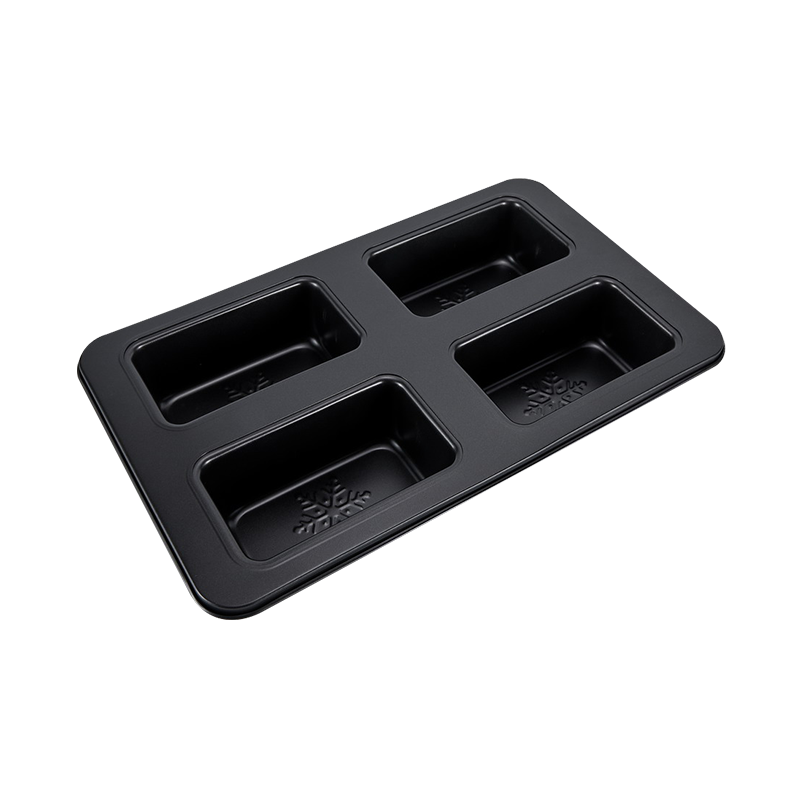
Sensory Testing Bakeware Standards Extend to Base Metal Too
Sensory testing bakeware requirements do not stop at the coating; the base carbon steel or aluminum body also gets evaluated for any tendency to impart metallic taste or odor under repeated use. A pan with an otherwise compliant coating can still draw scrutiny if the exposed metal at an edge or rivet point interacts with food in a way that affects taste, which is part of why LFGB testing looks at the finished product as a whole rather than certifying individual components in isolation. A LFGB bakeware design with an exposed rim or an uncoated handle rivet needs that specific contact point evaluated on its own, since the coated cooking surface passing sensory testing cleanly says nothing about how a bare metal edge elsewhere on the same pan will perform under the same conditions.
Testing Applies Across the Full Range of a Product Line, Not Just One Sample
A single approved sample tells a buyer that one unit of a LFGB bakeware line meets the standard, but production consistency across a full manufacturing run is a separate question that sample-level testing does not automatically answer. Coating thickness, application evenness, and base metal composition can all vary slightly across a large batch even when the formula and process specification stay constant on paper, and a shift in any of these variables can move a borderline result from compliant to non-compliant without changing the product's outward appearance at all. Buyers sourcing LFGB bakeware for a private-label program should ask a supplier how frequently batch-level retesting occurs, rather than assuming that one certified sample from years earlier still represents what is currently coming off the production line.
LFGB Compliance Runs Alongside Other Market Certifications
Bakeware destined for multiple export markets typically carries LFGB compliance next to FDA clearance for the US market and other regional certifications, reflecting the fact that each standard evaluates food-contact safety through a somewhat different lens. Wuyi Kaifu Bakeware Co., Ltd. maintains testing documentation across these overlapping standards so that a single production run can serve buyers sourcing for different destination markets without requiring separate manufacturing lines for each certification, keeping the sensory and chemical testing records on file alongside the equivalent documentation each other market requires.
