

 En
En  Deutsch
Many bakers move to an extra deep springform pan for a simple reason: they want more height.
Whether making a layered cheesecake, a celebration cake, or a dessert with multiple fillings, a deeper pan creates possibilities that a standard cake pan cannot easily provide.
However, after the first few bakes, many people notice something interesting.
The challenge is often not getting enough height.
It is getting the center and the outer edge to finish baking at the same pace.
Height Changes How Heat Travels
With a standard cake pan, heat does not need to travel very far to reach the middle of the batter.
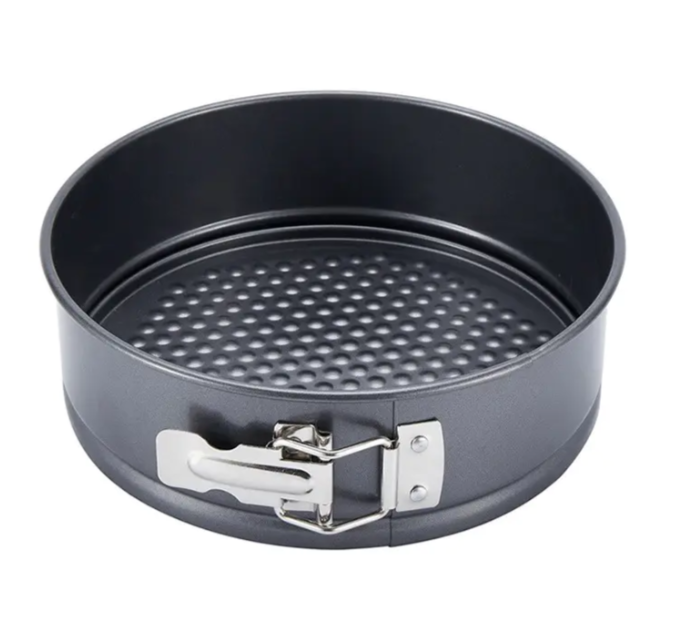
An extra deep springform pan changes that relationship.
As batter depth increases, heat requires more time to move toward the center. The outer portion of the cake is naturally exposed to the pan wall first, while the middle remains protected by the surrounding mixture.
This difference is not necessarily a problem.
It simply means that baking becomes less about surface appearance and more about understanding what is happening inside the cake.
The Top Can Be Misleading
One reason beginners sometimes struggle with an extra deep springform pan is that the top surface can look finished long before the interior is fully set.
A golden-brown top often creates confidence.
Yet experienced bakers know that appearance tells only part of the story when dealing with deeper batters.
Actually, some of the tallest cakes look completely finished from above while the center still needs additional baking time.
This is why experienced bakers rarely rely on color alone when evaluating doneness.
Different Recipes Respond Differently To Depth
Not every recipe reacts to a deeper pan in the same way.
A dense cheesecake baked in an extra deep springform pan behaves differently from a sponge cake or a batter containing fruit, chocolate, or cream-based fillings.
Ingredients influence how heat moves through the mixture.
As a result, a baking time that works perfectly for one recipe may require adjustments for another even when the pan remains unchanged.
This is one reason experienced bakers often keep personal notes after successful bakes.
The recipe and the pan create a combination that becomes easier to understand over time.
The Cooling Process Matters More Than People Expect
The baking stage receives most of the attention, but an extra deep springform pan continues affecting the cake after it leaves the oven.
Tall cakes retain heat longer than many people expect.
Even after removal from the oven, the center may continue changing as residual heat moves through the dessert. This is especially noticeable with cheesecakes and other dense recipes where texture develops gradually during cooling.
For many bakers, patience becomes part of the process.
The cake may not be fully ready simply because baking has ended.
Why Professionals Often Avoid Rushing
Watch experienced bakery staff working with an extra deep springform pan, and one pattern often appears.
They rarely rush the transition between baking, cooling, and unmolding.
The reason is not caution alone.
Tall cakes contain more structure, more retained heat, and more weight than shallower versions. Small shortcuts that might go unnoticed with a thin cake can become much more visible in a deeper format.
Over time, many professionals learn that consistency often comes from controlling the quiet stages of the process rather than focusing only on the oven itself.
The Height Is Only Part Of The Story
People usually choose an extra deep springform pan because they want to create taller desserts.
What they often discover is that the added height changes much more than appearance.
Heat movement, baking time, cooling behavior, and texture development all become part of the equation. The deeper pan creates new possibilities, but it also encourages bakers to pay closer attention to details that might be less noticeable in a standard cake mold.
In the end, the pan does not simply make a cake taller.
It changes how the entire baking process unfolds from the first pour of batter to the final slice.
